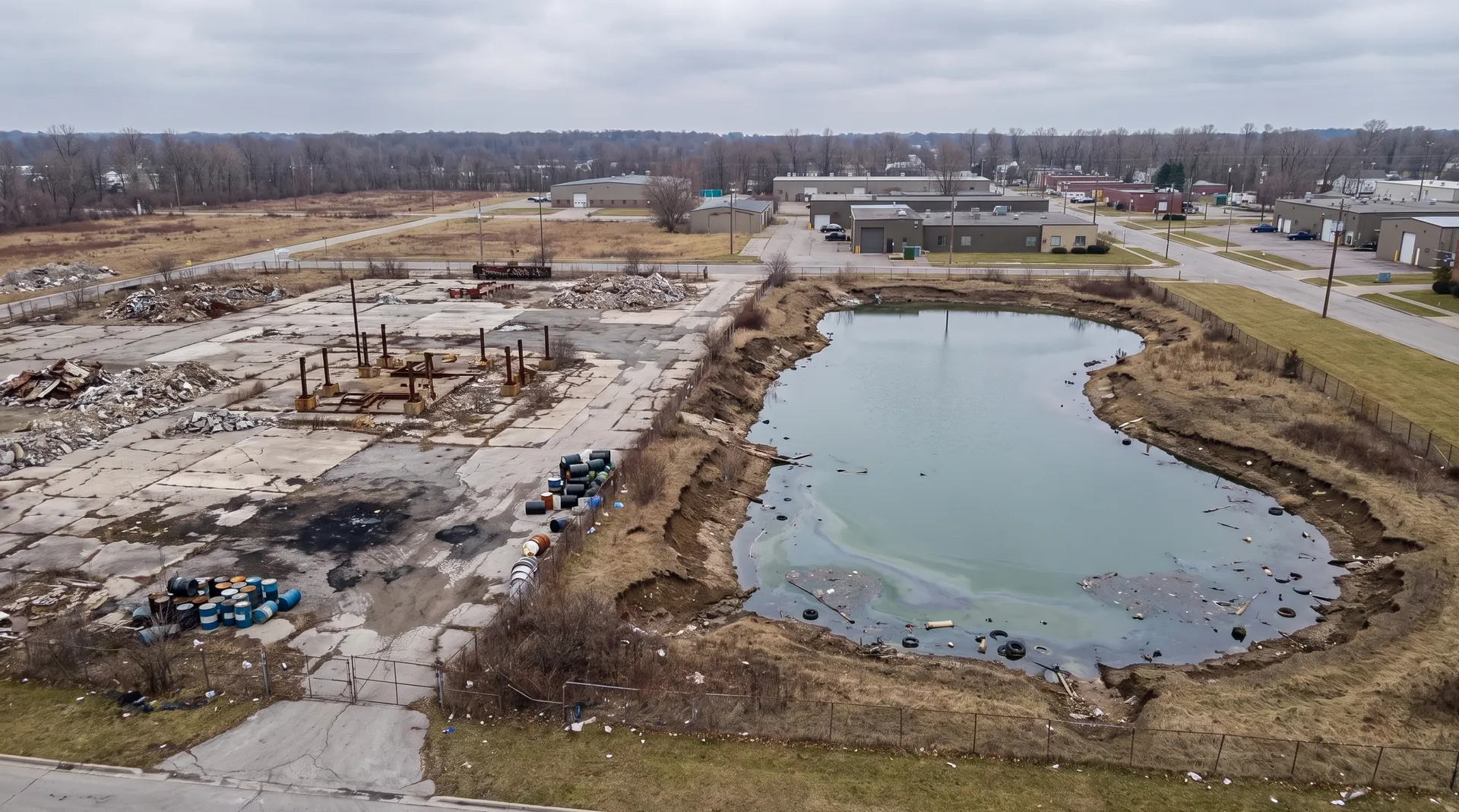
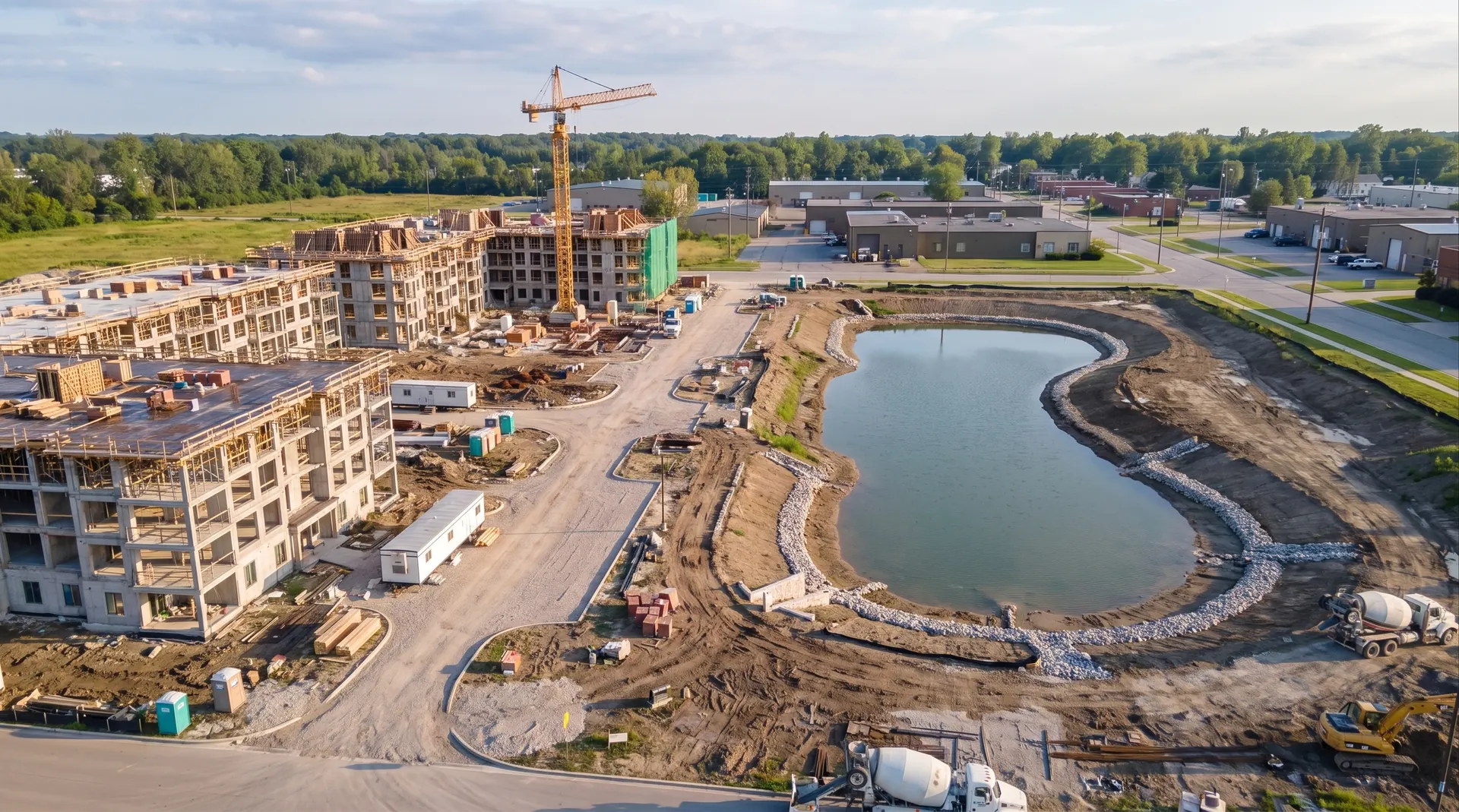
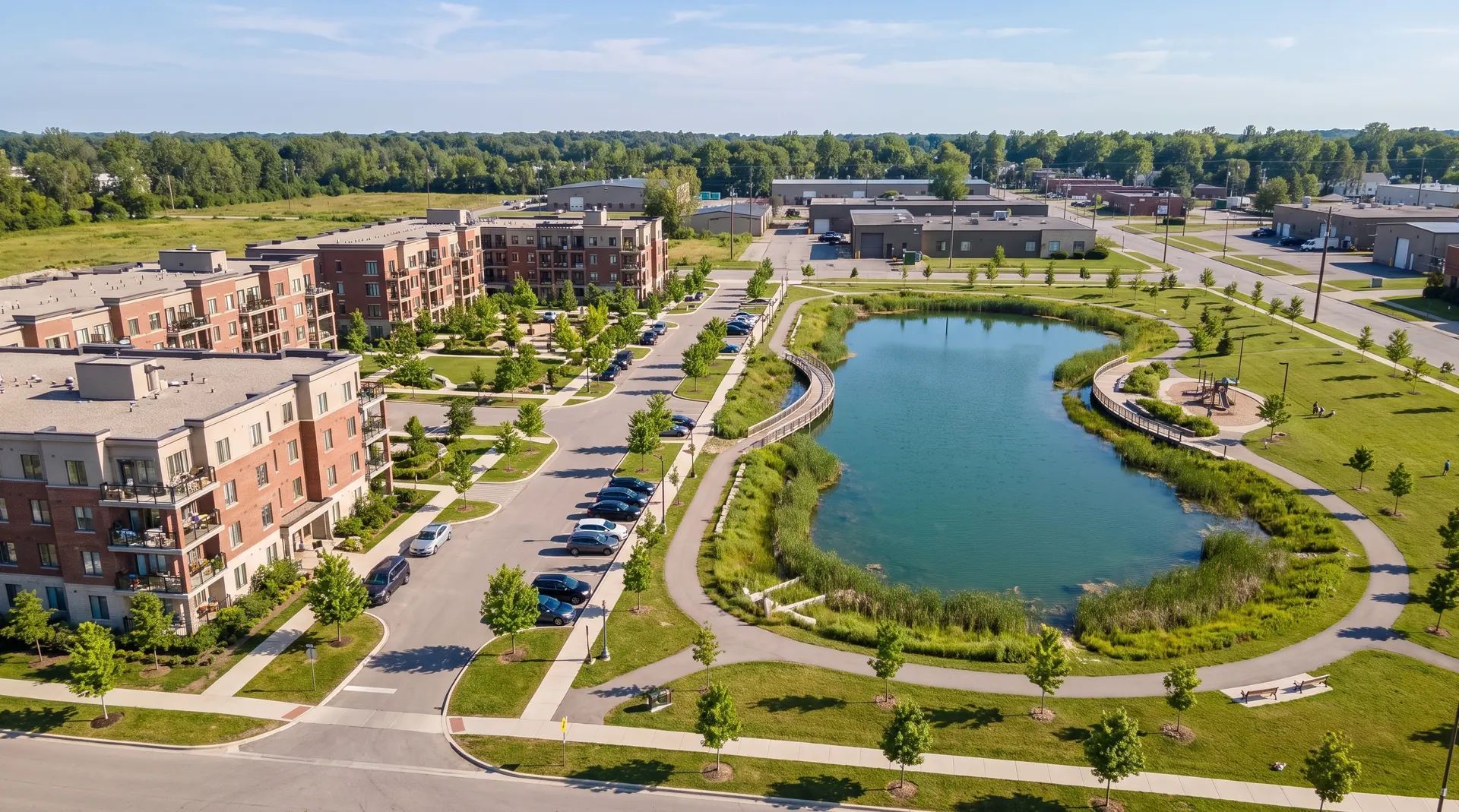
A former industrial parcel with a history, a buyer waiting, and no clear answer on what is actually in the ground or the water.
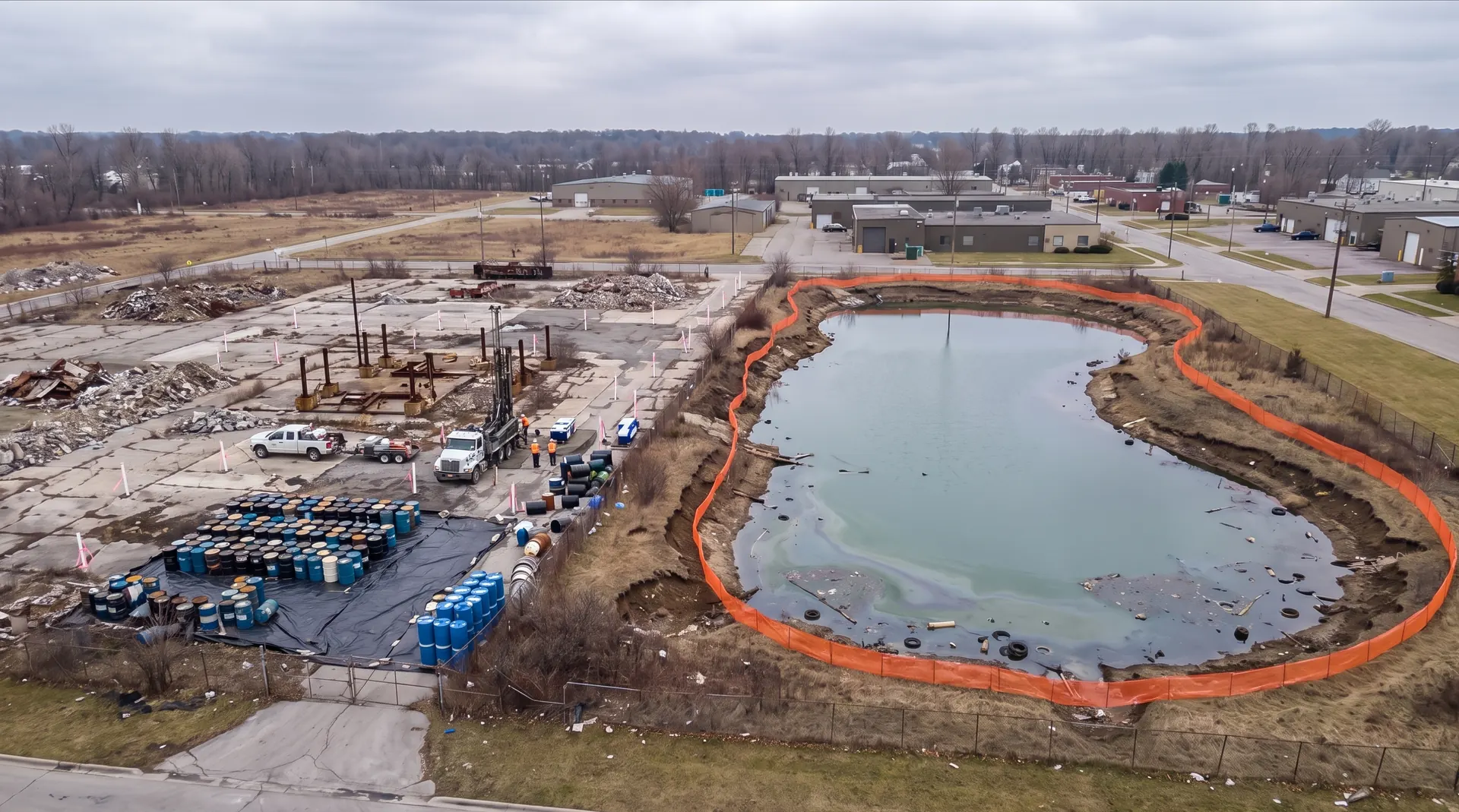
Phase I and Phase II assessment. Soil, groundwater, soil gas. The questions that need answering decide where to sample, not the other way around.
Remediation and mitigation planned around the construction schedule, so approvals, excavation and occupancy keep moving instead of stalling.
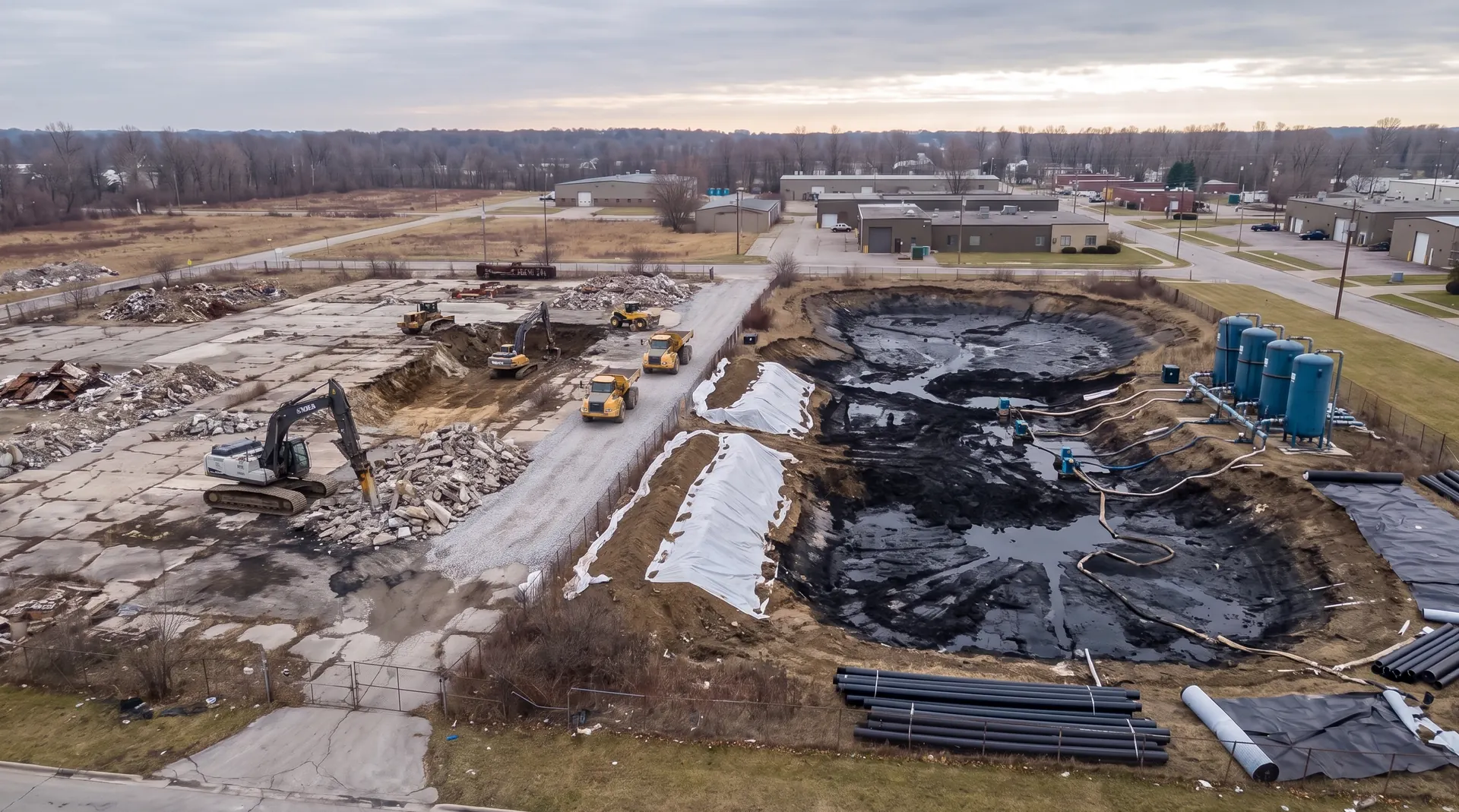
Environmental requirements folded into demolition, grading, foundations and sequencing, so the build goes up without the approvals falling behind.
The site closed out, the risk understood and documented, and a place that a lender, a regulator and the people who live there can all stand behind.
That is the arc of most environmental work, and it is judged on two things: did the project keep moving, and does the answer still hold up years later when somebody goes looking.
Every stage above changes who is asking the questions: a buyer, a lender, a regulator, a contractor, eventually a resident. What does not change is the value of one experienced person holding the whole picture, rather than a file handed between teams as the project moves along.
That continuity is the difference between findings that sit in a report and findings that actually shape the schedule, the budget and the closure.
The sequence above is illustrative and does not depict a specific client project.
An initial conversation can help identify the issues, determine what information is already available, and establish the most useful next step.